
Tourism & Hospitality
Hotels, safari lodges and resorts that earn in US dollars, run diesel generators and cannot rely on ZETDC supply, while international guests take note of your carbon footprint.
In depth
Lodges and hotels in Zimbabwe: cutting energy cost without cutting the guest experience
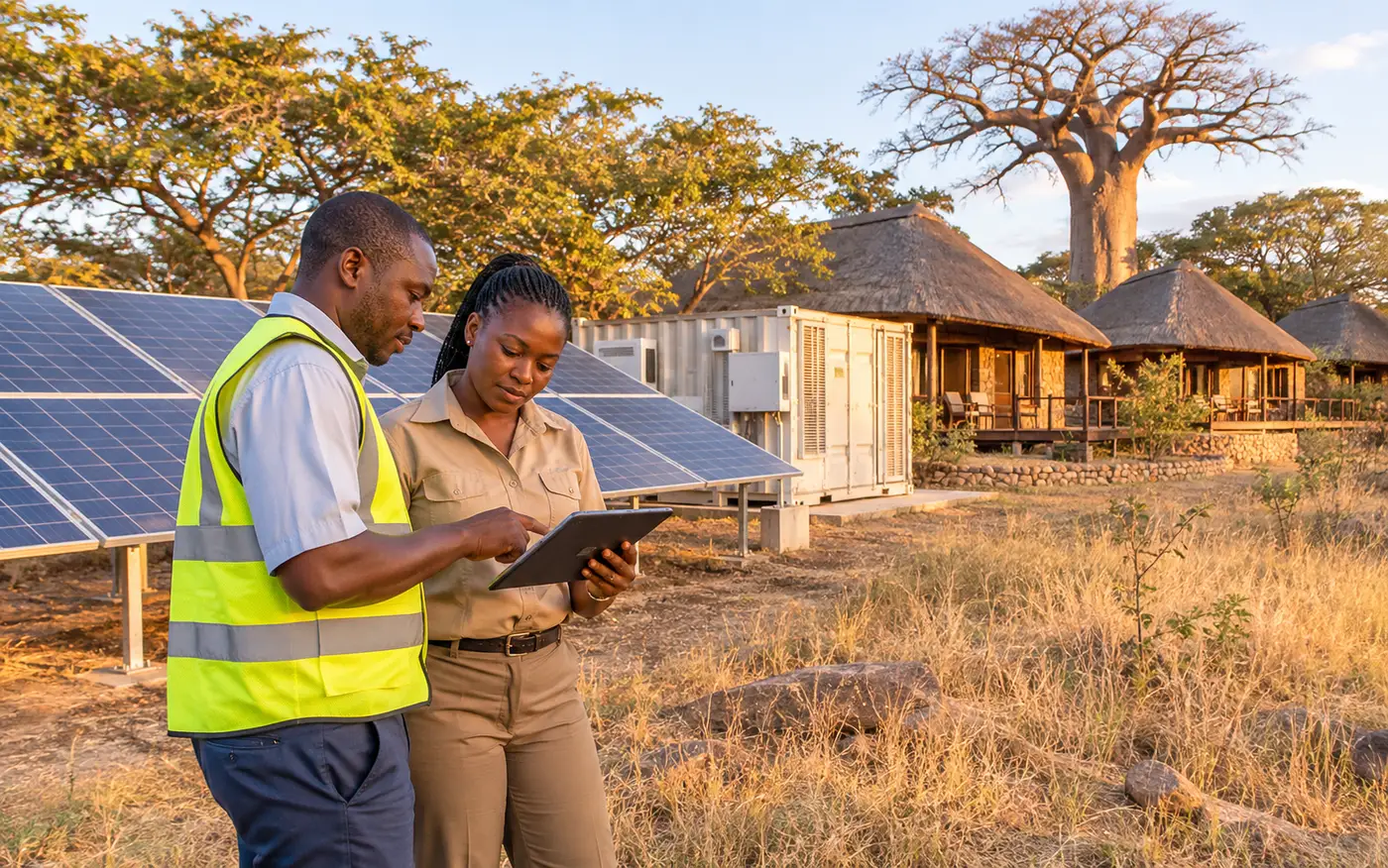
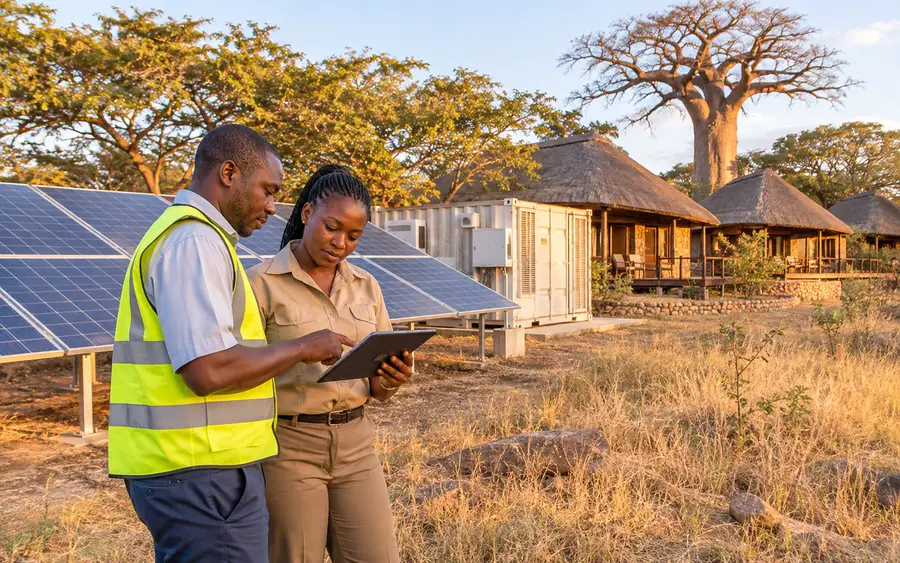
Tourism is one of Zimbabwe's most visible service industries, and it puts a special demand on electricity. A hotel in Harare or Victoria Falls runs air conditioning, lifts, kitchens, laundries and hot water around the clock. A safari lodge in the bush needs the same services. But it often makes its own power from solar panels, batteries and a diesel generator.
Where the energy goes
Most published studies of hotel energy come from cooler countries, and the shares change with climate, hotel type and service level. The United States Energy Information Administration reports on hotels and similar buildings in the United States. It finds that water heating and space heating each use about 20% of the energy. Lighting, cooling, refrigeration and computing each use 10% or less.
These differences show that no benchmark replaces measuring your own site. A hotel in a warm climate spends more on cooling than on heating. A hotel with a large conference trade has different kitchen and lighting loads from a leisure lodge. The studies do agree on one point.
Following the guest: controls that know who is in the room
The key point about hotel energy is simple. A room should use power only when someone is in it. A room cooled all day while the guest is out wastes energy. A room that stands empty for weeks in the low season should not be cooled at all. Several measures deal with this. Key-card master switches cut the power to the lights and air conditioning when the guest leaves.
Air conditioning and ventilation
In warm climates, cooling is the biggest load in most hotels. The savings come from three places. The first is the cooling plant itself. Well-kept chillers and split units use much less energy than neglected ones. Their coils are clean and they hold the right amount of refrigerant. Modern units with variable-speed compressors and fans are far more efficient when they run at part load. The second is the pumps and fans that move the cool air and water.
Read the full guide: Lodges and hotels in Zimbabwe: cutting energy cost without cutting the guest experienceAlso covered: Hot water: the natural place for solar and heat pumps · Kitchens and laundries · Powering the remote lodge · A sensible order of work
What you get
Guests expect the lights to stay on, and diesel is expensive.
Solar for lodges
Run the generator less, without hurting guest comfort.
Bill review
We look for savings in your demand and tariff.
Your sustainability story
Emissions figures for guests and tour operators.
Deliverables
What lands in your inbox
- Solar and battery design to cut generator hours
- Bill review for demand and tariff savings
- Emissions data pack for tour operators and guests
- A switching design that keeps the supply seamless
 Lodge solar
Before the call
What to bring
Rough information is fine. This is what lets us scope and quote quickly.
- Your last 12 months of bills
- Generator ratings and fuel use
- Occupancy through the seasons
- Roof or ground area for solar
How we work
From first message to finished work
- 1
Brief
A short call or message. Tell us about your site, your deadline and what is at stake. We reply within one working day.
- 2
Scope & fixed quote
We agree exactly what we will deliver, what we need from you, the timeline and a fixed price, before any work starts.
- 3
Engineer & document
We study your data, test the options and write the report or application, with every assumption stated.
- 4
Hand over & support
You get the finished package and a walk-through. We stay available while it is reviewed, approved or built.
Questions we hear
Before you book
Will guests notice any change?
No. The design aims for quiet, seamless switching.
What happens after I book a call?
We reply within one working day, agree a short scope and a fixed quote, and start once you approve it.
Keep reading
The full guide, in plain English
Guide Tourism · 7 min read
Lodges and hotels in Zimbabwe: cutting energy cost without cutting the guest experience
Hotels and safari lodges use energy for comfort, hot water, kitchens and laundry. This article examines the load, explains the measures that reduce cost without reducing comfort, and sets out the options for off-grid and hybrid supply.
Where the energy goesFollowing the guest: controls that know who is in the roomAir conditioning and ventilationHot water: the natural place for solar and heat pumpsKitchens and laundriesPowering the remote lodge
Read the full guide
More guides that go with this page
 Solar · 9 min readSolar for business in Zimbabwe: own-consumption licences, net metering and when it paysRead the guide
 Agriculture · 9 min readHybrid solar microgrids for farms and agro-processors in ZimbabweRead the guide
 Storage · 10 min readSizing solar plus battery: the questions that decide the design and the costRead the guide
Talk to an AVEX GRID consultant
Have a project in mind, or want a second opinion on a quote you have received? Send us a short message and we will reply within one working day.