
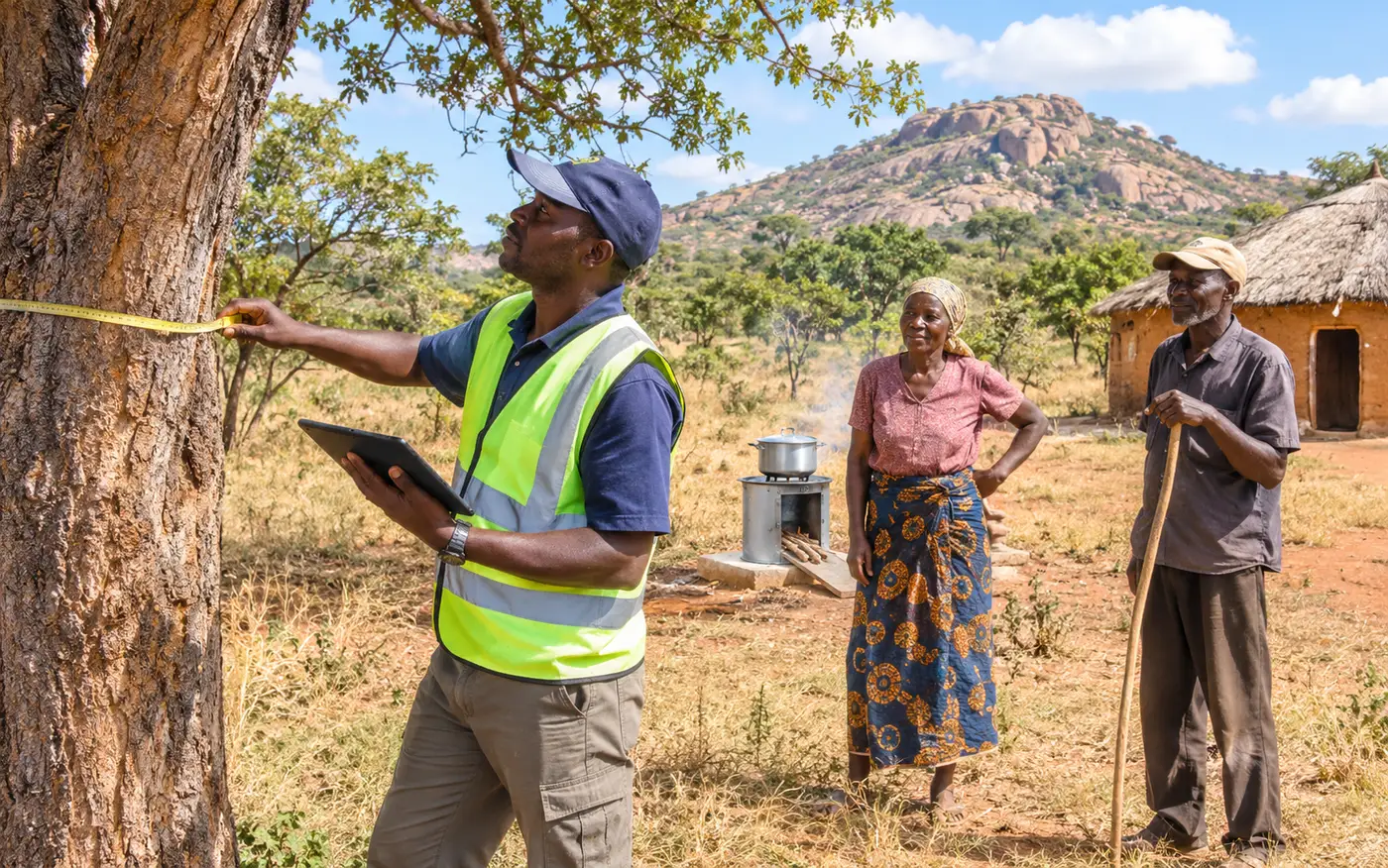
Carbon Auditing & Reduction Plans
We measure your emissions, then give you a costed plan to cut diesel use and move to solar. Built for mines, farm exporters and factories in Zimbabwe.
In depth
Measuring your carbon footprint: Scope 1, 2 and 3 for Zimbabwean companies
Demand for emissions data has moved from sustainability reports into commercial documents. Export customers ask for the carbon content of what they buy. Lenders ask for the emissions of the businesses they finance. Listed companies are preparing to report on climate under international standards, and they ask their suppliers for the numbers. A Zimbabwean company that cannot answer these questions in a consistent way loses time and sometimes orders.
The standard behind the numbers
The Greenhouse Gas Protocol is the most widely used framework for counting company emissions. The World Resources Institute and the World Business Council for Sustainable Development developed it. Its Corporate Standard says how to set the boundary of the company, how to sort emissions into scopes and how to report them. Two later documents add detail: the Scope 2 Guidance of 2015 and the Corporate Value Chain (Scope 3) Standard of 2011.
The three scopes depend on where the emission happens, compared with the reporting company.
Scope 1 is the direct emissions from sources the company owns or controls. Examples are fuel burned in boilers, furnaces, vehicles and generators, process emissions and leaked refrigerants.
Set the boundary first
Before any calculation, the company decides which operations are in the inventory. The Corporate Standard offers two ways to do this. Under the equity share approach, you count emissions according to your share of ownership in each operation. Under the control approach, you count all emissions from operations you control, either financially or operationally. Most companies choose operational control, because it matches the activities that management can change.
The company also picks a reporting year, which is usually the financial year. It picks a base year as well, against which future change is measured. The base year should be a normal year with reliable data.
How the calculation works
Every line in the inventory has the same form: how much you did × the emission factor for it. Add the lines up and you have your footprint. Gases other than carbon dioxide are converted to carbon-dioxide equivalent, so everything is counted in one unit. Methane counts about 28 times and nitrous oxide about 265 times as much as carbon dioxide over 100 years (IPCC).
Read the full guide: Measuring your carbon footprint: Scope 1, 2 and 3 for Zimbabwean companiesAlso covered: Scope 1: what the company burns and leaks · Scope 2: purchased electricity, counted two ways · Scope 3: screen before you measure · Quality, verification and the common errors
What you get
Results you can take to your board or lender
An emissions baseline you can defend
Scope 1 and 2 worked out from your own data, with the factors stated.
Ways to cut emissions, ranked
Each measure with its emissions cut and cost, so you act where it pays.
Ready to report
Set out for buyers, lenders and your own reports.
Deliverables
What lands in your inbox
- Emissions inventory (Scopes 1 and 2)
- Note on the method, with emission factors
- Plan to cut emissions
- Summary for buyers and lenders
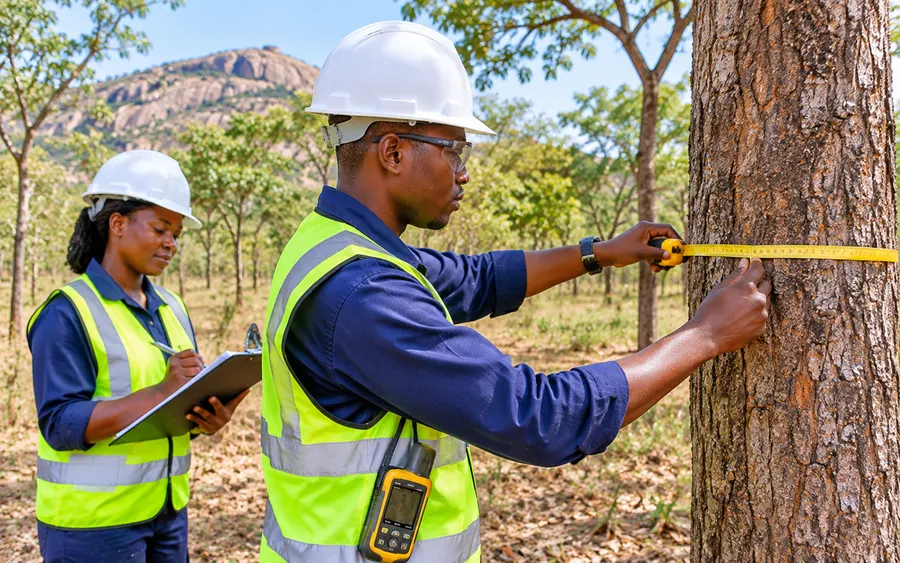 Carbon field survey
Before the call
What to bring
Rough information is fine. This is what lets us scope and quote quickly.
- 12 months of electricity bills
- Fuel records: diesel, petrol, LPG, coal
- Production volumes for the same period
- Any emissions request from a buyer or lender
How we work
From first message to finished work
- 1
Brief
A short call or message. Tell us about your site, your deadline and what is at stake. We reply within one working day.
- 2
Scope & fixed quote
We agree exactly what we will deliver, what we need from you, the timeline and a fixed price, before any work starts.
- 3
Engineer & document
We study your data, test the options and write the report or application, with every assumption stated.
- 4
Hand over & support
You get the finished package and a walk-through. We stay available while it is reviewed, approved or built.
Questions we hear
Before you book
Is this verified?
We prepare the inventory. Where a buyer requires independent verification, an accredited verifier does it.
Keep reading
The full guide, in plain English
 Guide Carbon · 8 min read
Measuring your carbon footprint: Scope 1, 2 and 3 for Zimbabwean companies
How a company measures its greenhouse gas emissions using the GHG Protocol: setting the boundary, calculating Scope 1 and Scope 2 from fuel and electricity records, screening Scope 3, and avoiding the common errors.
The standard behind the numbersSet the boundary firstHow the calculation worksScope 1: what the company burns and leaksScope 2: purchased electricity, counted two waysScope 3: screen before you measure
Read the full guide
More guides that go with this page
 Certificates · 7 min readEnergy and carbon evidence: the certificates, statements and data buyers ask forRead the guide
 Carbon · 6 min readEU CBAM for Zimbabwean exporters: what changed in 2026 and what to prepareRead the guide
 Carbon · 8 min readCarbon credits in Zimbabwe: how ZiCMA registration works and how to prepareRead the guide
Talk to an AVEX GRID consultant
Have a project in mind, or want a second opinion on a quote you have received? Send us a short message and we will reply within one working day.