

ESG Reporting: Energy & Emissions Data
Stock-exchange practice notes and buyers are asking for more on sustainability. We prepare the energy and emissions evidence your report depends on.
In depth
ESG energy and emissions data: what lenders ask for and how to prepare it
ESG stands for environmental, social and governance. It began as a way for companies to tell a good story. Now it is a matter of data, and the people who lend money are the ones asking for it. For the energy and emissions part of the request, your own meters and invoices are the source. How good your records are decides how fast you can answer.
Why lenders have started asking
Banks and investors carry climate risk through the businesses they lend to. Under the Greenhouse Gas Protocol, a bank must report the emissions of the businesses it finances. These are called financed emissions, and they count as Scope 3, category 15. Banks that have promised to reach net zero, or that must follow climate reporting rules, need these figures for their whole loan book.
African sustainability analysts wrote in 2025 and 2026 about how hard this is. Many borrowers have no emissions data and sometimes no proper energy records. This is common among small and medium businesses, and in farming, mining and the informal sector. Lenders then use rough averages for the sector, and the uncertainty is big.
The standards behind the request
In 2023 the International Sustainability Standards Board published IFRS S2, a global standard on reporting climate risks. It asks companies to report their Scope 1 and Scope 2 emissions, and Scope 3 where it matters, together with their climate risks, targets and plans. The Board has since eased some Scope 3 rules, including the ones on financed emissions, but the direction is clear.
African sustainability publications report that eight countries have committed to adopting IFRS S2. They are Zimbabwe, Kenya, Nigeria, Ghana, Rwanda, Tanzania, Uganda and Zambia. Kenya plans to make it compulsory for public interest entities from 2027. Check the details and dates for Zimbabwe with the regulators.
What a lender actually asks for
The requests that borrowers receive are usually shorter than the standards behind them. A typical request has five items:
- Your yearly electricity use by source, and its cost, for the last two or three years.
- Your yearly fuel use, such as diesel, petrol, coal, wood and LPG, with the quantity and what it was used for.
- Your Scope 1 and Scope 2 emissions, with the method and the emission factors you used.
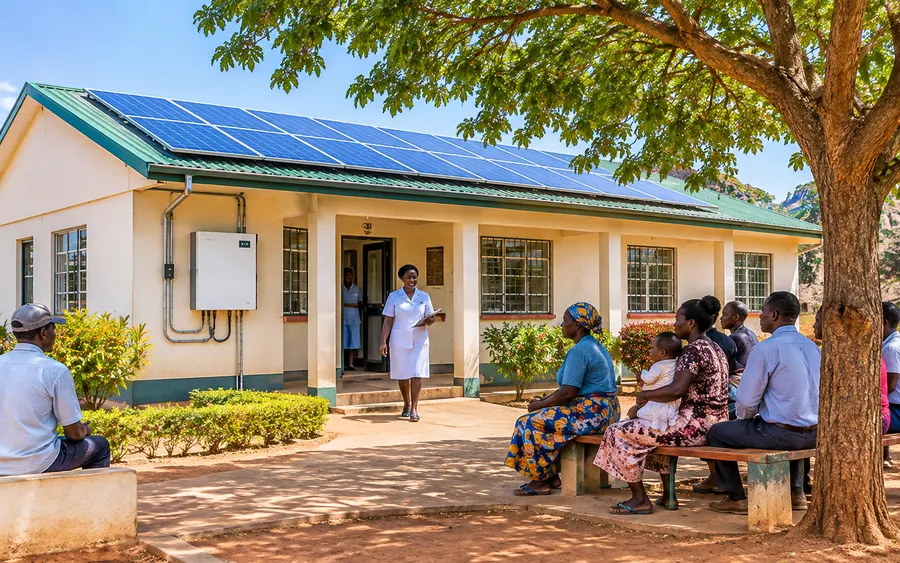
- Details of any on-site generation, including solar, and any renewable energy certificates you hold.
Borrowers that use a lot of energy, such as miners, smelters and food processors, get more questions. So do exporters that sell into markets with carbon border rules. The lender also asks who prepared the data and whether anyone has verified it.
Read the full guide: ESG energy and emissions data: what lenders ask for and how to prepare itAlso covered: How the data are used · Preparing the file · The opportunity inside the burden
What you get
Results you can take to your board or lender
A report that holds together
Energy and emissions figures backed by evidence.
Fewer gaps
We flag missing data early so you can fix it.
Deliverables
What lands in your inbox
- Energy and emissions data pack
- Disclosure tables
- Draft wording for the energy section
- List of gaps
 Solar for clinics
Before the call
What to bring
Rough information is fine. This is what lets us scope and quote quickly.
- Your last sustainability or annual report
- Energy and fuel data for the reporting year
- The disclosure standard or buyer questionnaire you must meet
- Your reporting deadline
How we work
From first message to finished work
- 1
Brief
A short call or message. Tell us about your site, your deadline and what is at stake. We reply within one working day.
- 2
Scope & fixed quote
We agree exactly what we will deliver, what we need from you, the timeline and a fixed price, before any work starts.
- 3
Engineer & document
We study your data, test the options and write the report or application, with every assumption stated.
- 4
Hand over & support
You get the finished package and a walk-through. We stay available while it is reviewed, approved or built.
Questions we hear
Before you book
Do you write the whole ESG report?
We cover the energy and emissions sections and support the rest of your team.
Keep reading
The full guide, in plain English
 Guide ESG · 6 min read
ESG energy and emissions data: what lenders ask for and how to prepare it
Lenders and investors increasingly ask borrowers for energy and emissions data. This article explains why, what they ask for, how the data are used and how a Zimbabwean company can prepare a file that stands up to review.
Why lenders have started askingThe standards behind the requestWhat a lender actually asks forHow the data are usedPreparing the fileThe opportunity inside the burden
Read the full guide
More guides that go with this page
 Carbon · 8 min readCarbon credits in Zimbabwe: how ZiCMA registration works and how to prepareRead the guide
 Carbon · 8 min readMeasuring your carbon footprint: Scope 1, 2 and 3 for Zimbabwean companiesRead the guide
 Carbon · 6 min readEU CBAM for Zimbabwean exporters: what changed in 2026 and what to prepareRead the guide
Talk to an AVEX GRID consultant
Have a project in mind, or want a second opinion on a quote you have received? Send us a short message and we will reply within one working day.