

Banking & Financial Services
Banks, insurers and microfinance institutions with branches and data halls across Zimbabwe, where power must never fail and ESG reporting expectations are rising.
In depth
Banks and financial branches: keeping power on and the energy bill down
A bank branch is a small installation, but the cost of it going down is very high. Its load is modest. It is usually a few tens of kVA, for air conditioning, lights, computers and security. But a lot of value depends on that load: customer transactions, cash handling and the trust a bank must earn every day. So the job is not to supply a lot of power.
Start with the services, not the equipment
Start with a conversation between the electrical engineer and the bank's operations and risk teams. Ask which services must keep running during a power cut, and for how long. Four groups of loads appear in almost every branch.
The first group is the core systems that process transactions. These are the teller terminals, the branch server, and the printers and card readers connected to them. The second group is the network. A branch without communications is cut off from head office, however well its own equipment is powered.
Each group can tolerate a different gap. Transaction systems and servers usually cannot tolerate any break. If power fails in the middle of a transaction, the records can be left inconsistent. Network equipment can tolerate a short gap, but only if it restarts reliably.
Layering the backup
The standard design has three layers.
The first layer is the UPS with batteries. It carries the critical loads with no break and protects them from sags and surges on the grid. Size its batteries for the time the generator needs to start, settle and take the load. Add some allowance for the batteries ageing over their life.
The second layer is a generator. It has an automatic transfer switch, which moves the supply from the grid to the generator by itself when the power fails. It also needs enough fuel for the longest outage the branch design assumes. The generator takes over for longer outages.
Do not forget the cooling
A UPS protects the electrical supply of the equipment. It does nothing for the temperature of the room. Servers and network equipment give off heat all the time. If cooling stops, they can reach damaging temperatures within a short time, even while they are still powered. So put the server room cooling on the essential board with the generator. Then check that the cooling units restart by themselves after a transfer.
Read the full guide: Banks and financial branches: keeping power on and the energy bill downAlso covered: Design for the whole network · Lowering the bill with rooftop solar · Testing, inspection and records
What you get
Branch networks need power that stays on and clear energy reporting.
Reliable branch power
Backup design for the systems that must keep running.
Emissions data
Energy and emissions figures for your reports.
Solar roll-out
A plan for the branches that suit solar.
Deliverables
What lands in your inbox
- Backup power design for the systems each branch cannot lose
- Energy and emissions data for the sustainability report
- Solar plan for the branches that suit it
- Branch-by-branch comparison
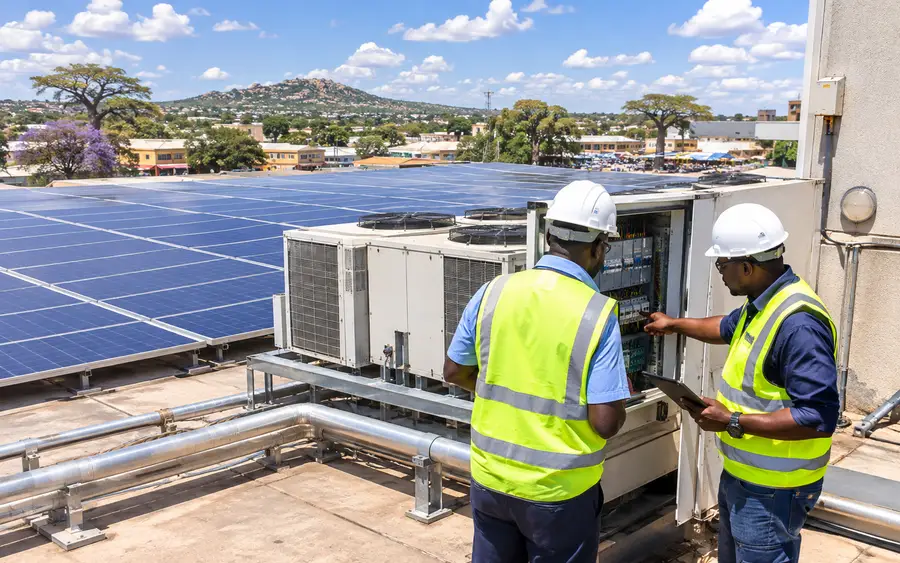 Commercial solar
Before the call
What to bring
Rough information is fine. This is what lets us scope and quote quickly.
- Your last 12 months of bills for a sample of branches
- Branch list with floor area
- UPS and generator details
- The reporting framework you follow
How we work
From first message to finished work
- 1
Brief
A short call or message. Tell us about your site, your deadline and what is at stake. We reply within one working day.
- 2
Scope & fixed quote
We agree exactly what we will deliver, what we need from you, the timeline and a fixed price, before any work starts.
- 3
Engineer & document
We study your data, test the options and write the report or application, with every assumption stated.
- 4
Hand over & support
You get the finished package and a walk-through. We stay available while it is reviewed, approved or built.
Questions we hear
Before you book
Can you support sustainability reporting?
Yes, for the energy and emissions sections.
What happens after I book a call?
We reply within one working day, agree a short scope and a fixed quote, and start once you approve it.
Keep reading
The full guide, in plain English
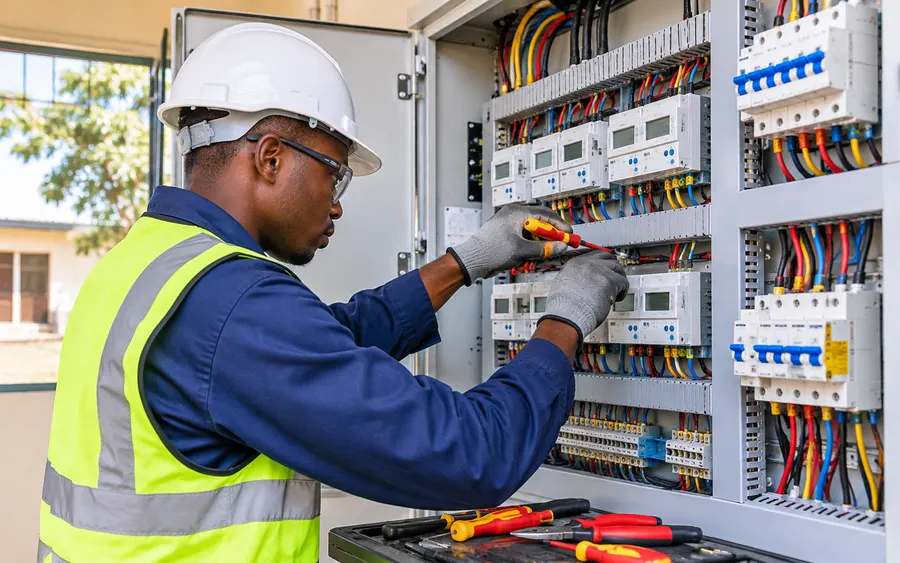 Guide Banking · 6 min read
Banks and financial branches: keeping power on and the energy bill down
A bank branch cannot serve customers without power, network and cooling for its servers. This article explains how financial institutions identify critical loads, layer backup supply, and lower the cost of a branch network with solar and standard designs.
Start with the services, not the equipmentLayering the backupDo not forget the coolingDesign for the whole networkLowering the bill with rooftop solarTesting, inspection and records
Read the full guide
More guides that go with this page
 Compliance · 7 min readEnergy audits in Zimbabwe: what SI 122 of 2026 requires and what you receiveRead the guide
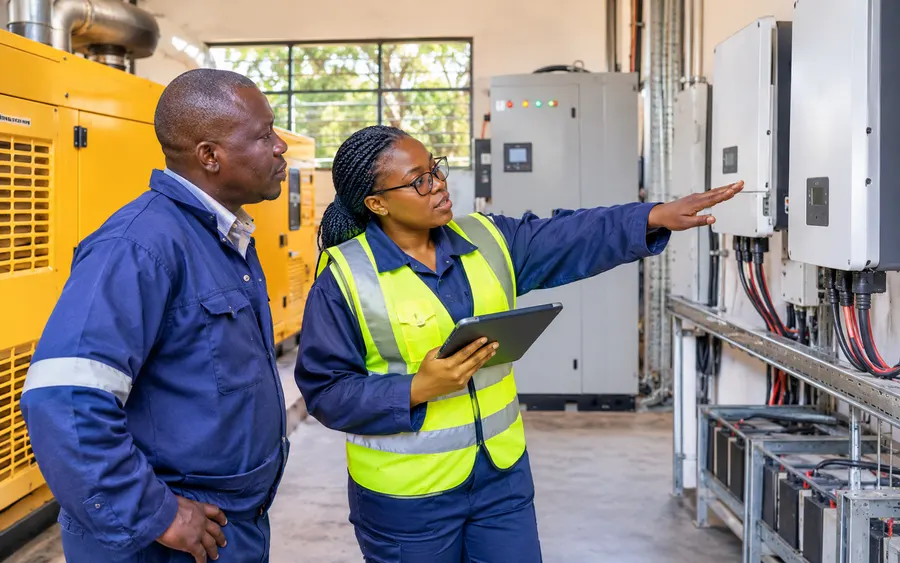 Healthcare · 7 min readReliable power for hospitals and clinics: backup, protection and costRead the guide
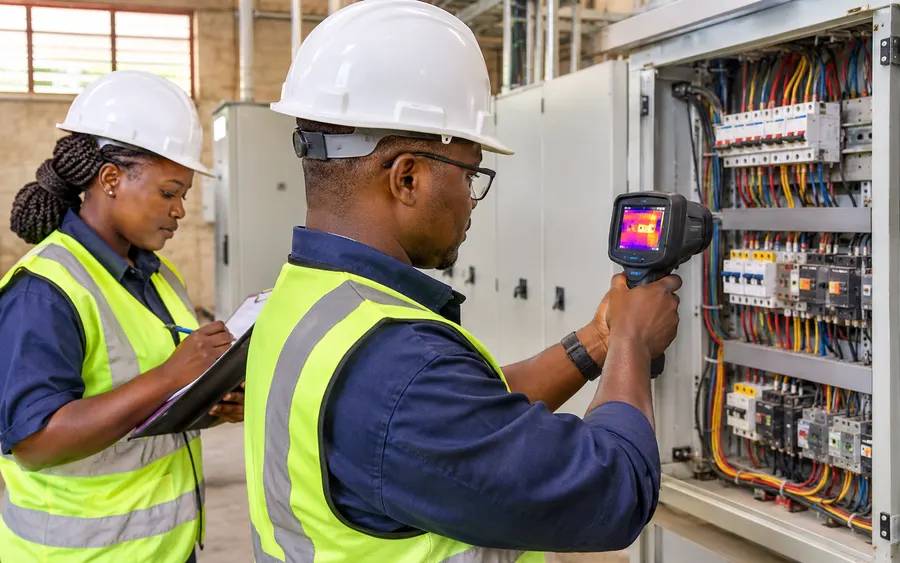 Maintenance · 5 min readThermal imaging for electrical faults: what it finds and how to act on itRead the guide
Talk to an AVEX GRID consultant
Have a project in mind, or want a second opinion on a quote you have received? Send us a short message and we will reply within one working day.