

CBAM for Zimbabwean Exporters: What to Prepare
The EU Carbon Border Adjustment Mechanism (CBAM) affects some exporters of metals and other goods that take a lot of energy to make. A plain-English guide to the data you will be asked for.
In depth
EU CBAM for Zimbabwean exporters: what changed in 2026 and what to prepare
For years the European Union's Carbon Border Adjustment Mechanism, known as CBAM, was something exporters could watch from a distance. It is a levy on the carbon inside certain goods that are imported into the EU. In 2026 it became a real cost. This guide explains what it covers, who is affected in Zimbabwe, and what an exporter should have ready when a European buyer asks for emissions data.
What CBAM is, in one paragraph
The EU already puts a price on carbon for its own factories. CBAM adds a matching charge on selected imports. This stops foreign producers from gaining an advantage by making goods more cheaply and with more pollution. The importer in the EU must declare the emissions inside the goods and buy certificates to cover them. The price follows the EU carbon market. The importer pays, but it will pass the cost and the paperwork back to you, the supplier.
Which Zimbabwean exports are covered?
The list is by product group, not by country. These are the Zimbabwean exports most likely to be caught:
- Ferro-alloys, especially ferrochrome. They fall under the iron and steel group. Where you have no measured data, the EU uses default emissions values that are set high.
- Iron and steel products and some steel articles made from them.
- Fertilisers and certain chemicals, where they are exported to the EU.
- Cement and aluminium, in the unlikely case of shipments to the EU.
Lithium concentrate, nickel, gold, platinum-group metals and tobacco are not covered at present. That can change, because the EU has said it will review the list. So we re-check it for each job.
The 50-tonne question
The EU has a simplification for small importers. If an importer brings in less than about 50 tonnes of covered goods a year in total, it is exempt. If your EU customers take large volumes, this will not help you. If you sell small lots, ask your buyer whether it applies. We check the exact limit for your products.
Read the full guide: EU CBAM for Zimbabwean exporters: what changed in 2026 and what to prepareAlso covered: What the buyer will ask you for · Where electricity matters, and where it does not · A 90-day preparation plan
What you get
Be ready when your EU buyer asks
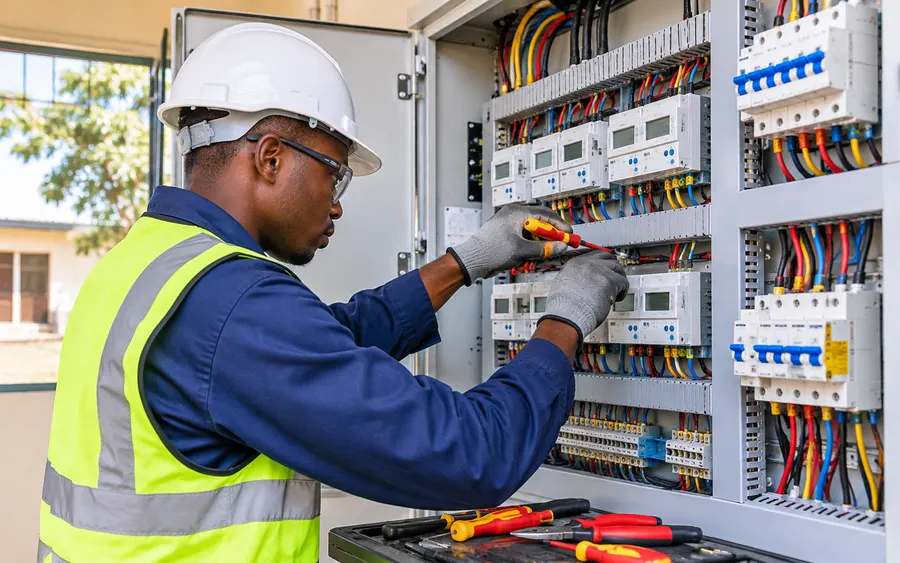
 Plant inspection
A clear data set
Your energy, fuel and production figures, sorted by product line.
A baseline you can defend
Scope 1 and 2 emissions, with the method written down.
Ways to cut it
Where cleaner electricity could lower the emissions in your product.
Before the call
What to bring
Rough information is fine. This is what lets us scope and quote quickly.
- Products and EU customs codes you export
- Annual export volumes to the EU
- Electricity and fuel use per product line
- Any request from your EU importer
How we work
From first message to finished work
- 1
Brief
A short call or message. Tell us about your site, your deadline and what is at stake. We reply within one working day.
- 2
Scope & fixed quote
We agree exactly what we will deliver, what we need from you, the timeline and a fixed price, before any work starts.
- 3
Engineer & document
We study your data, test the options and write the report or application, with every assumption stated.
- 4
Hand over & support
You get the finished package and a walk-through. We stay available while it is reviewed, approved or built.
Questions we hear
Before you book
Is my product covered?
It depends on the EU rules in force. Check the current EU text, or ask us and we will point you to the right source.
Do you verify emissions?
No. Where verification is required, an accredited verifier does it. We prepare the data.
Keep reading
The full guide, in plain English
 Guide Carbon · 6 min read
EU CBAM for Zimbabwean exporters: what changed in 2026 and what to prepare
The EU carbon border levy moved from reporting to payment in 2026. Which Zimbabwean exports are covered, what data buyers will ask for, and how to prepare before the first declaration.
What CBAM is, in one paragraphWhich Zimbabwean exports are covered?The 50-tonne questionWhat the buyer will ask you forWhere electricity matters, and where it does notA 90-day preparation plan
Read the full guide
More guides that go with this page

Talk to an AVEX GRID consultant
Have a project in mind, or want a second opinion on a quote you have received? Send us a short message and we will reply within one working day.