
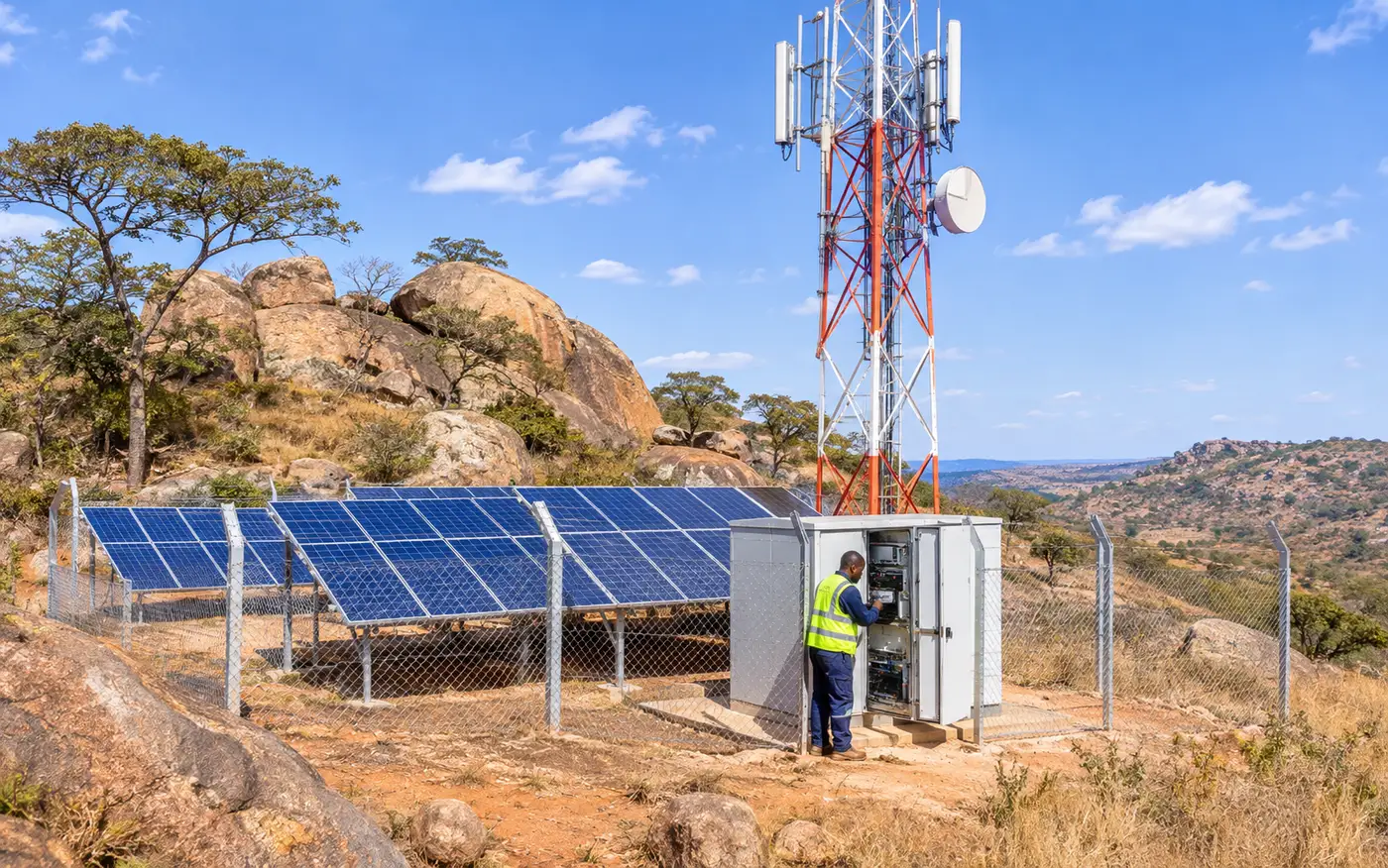
Data Centres & Telecom
Co-location centres, edge sites and telecom towers where near-constant uptime and PUE (how efficiently power is used) both matter. Choosing the right hybrid system is a business decision as much as an engineering one.
In depth
Powering data centres and telecom sites in Zimbabwe: uptime, batteries and cost
Digital services depend on stable power more than almost any other industry. A short break in a server room can corrupt a database and knock thousands of connections offline. A cell tower that loses power silences a whole community. In these facilities the electrical design puts continuity first and cost second. The clever engineering is in cutting cost without cutting continuity.
Availability as a design target
The Uptime Institute sorts data centres into four tiers. The tier depends on the redundancy built into their power and cooling. Redundancy means having spare equipment, such as a second generator or battery, so one failure does not stop the service.
A Tier I facility has a single path for power and cooling and no spare parts. Any failure or maintenance job interrupts the service. A Tier II facility adds spare components. A Tier III facility has more than one path, so it can be maintained without shutting down. This is called concurrent maintainability.
Each step up in tier adds cost and complexity. So choose the tier from the cost of downtime to your customers, not from prestige.
The power chain
The classic power chain has three stages.
The utility feed is the main source. Where the grid allows, a second independent feed adds safety. In practice, though, utilities in this region often supply both feeds from the same upstream point. Next comes the UPS with batteries. It carries the load with no break at the moment of failure.
Designers use a short notation to describe redundancy. N is the capacity needed to carry the load. N+1 adds one spare unit, so any one unit can fail or be serviced. 2N duplicates the whole system. Choosing among them is a trade-off between cost, space and the effect of a failure.
Cooling and power usage effectiveness
Servers turn almost all the electricity they use into heat. The cooling system exists to remove that heat. So the efficiency of a facility is measured by power usage effectiveness, or PUE. It is the total energy of the facility divided by the energy used by the IT equipment alone. A value of 1.0 would mean nothing is spent on cooling, lighting or losses.
The Uptime Institute's annual survey has put the industry average at about 1.55 to 1.58 in recent years. That figure has hardly moved. Many recent large builds do reach values near 1.3, and sometimes lower.
Read the full guide: Powering data centres and telecom sites in Zimbabwe: uptime, batteries and costAlso covered: Telecom towers: batteries, solar and the diesel problem · Protecting the equipment and the people
What you get
Staying online depends on clean power with a backup for every weak point.
Backup review
We look for single points of failure in your supply and protection.
Hybrid power
Solar, battery and generator designed to work together at remote sites.
Cost per unit
Know what a unit of power really costs when you run on a generator.
Deliverables
What lands in your inbox
- Backup and single-point-of-failure review of your supply and protection
- Solar, battery and generator design for remote sites
- What a unit (kWh) really costs on generator
- Load and capacity model for planned growth
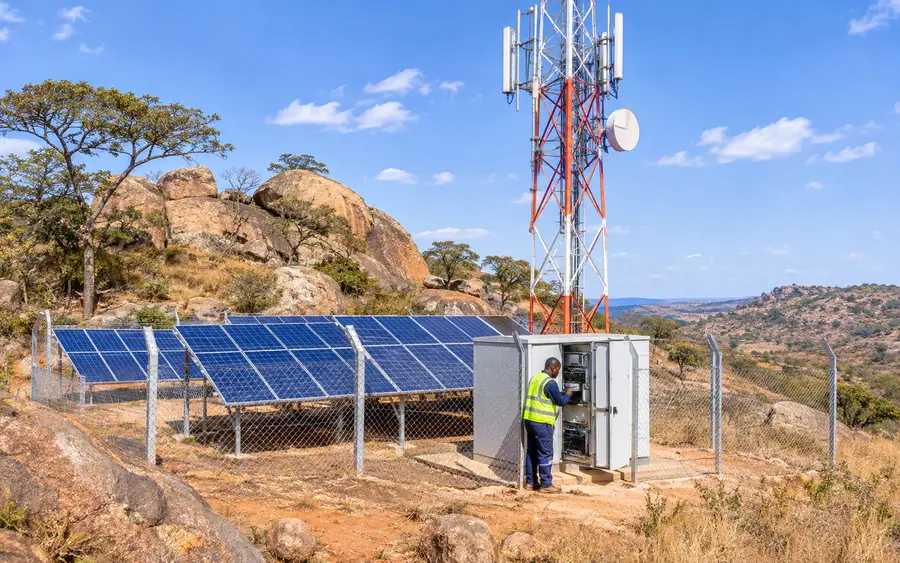 Telecom power
Before the call
What to bring
Rough information is fine. This is what lets us scope and quote quickly.
- Load log or equipment list with ratings
- Single-line diagram and your backup arrangement
- Generator fuel records
- Your uptime targets and list of sites
How we work
From first message to finished work
- 1
Brief
A short call or message. Tell us about your site, your deadline and what is at stake. We reply within one working day.
- 2
Scope & fixed quote
We agree exactly what we will deliver, what we need from you, the timeline and a fixed price, before any work starts.
- 3
Engineer & document
We study your data, test the options and write the report or application, with every assumption stated.
- 4
Hand over & support
You get the finished package and a walk-through. We stay available while it is reviewed, approved or built.
Questions we hear
Before you book
Can you cover a whole fleet of towers?
We can model one typical site and apply the findings across the fleet.
What happens after I book a call?
We reply within one working day, agree a short scope and a fixed quote, and start once you approve it.
Keep reading
The full guide, in plain English
Guide Data centres · 7 min read
Powering data centres and telecom sites in Zimbabwe: uptime, batteries and cost
Data centres and telecom towers sell availability. This article explains how their power systems are layered for uptime, how cooling and PUE shape the bill, and how solar and lithium batteries are changing the economics of remote sites.
Availability as a design targetThe power chainCooling and power usage effectivenessTelecom towers: batteries, solar and the diesel problemProtecting the equipment and the people
Read the full guide
More guides that go with this page
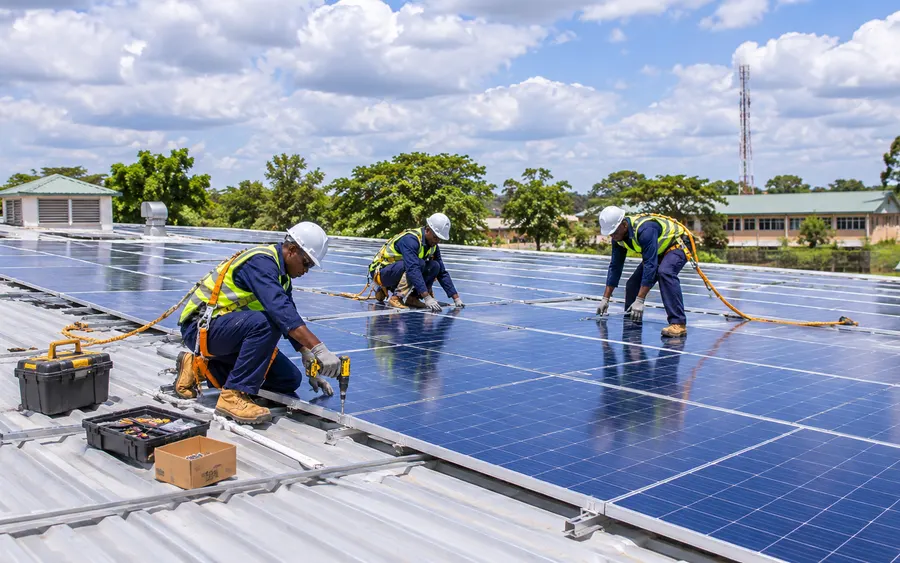 Storage · 10 min readSizing solar plus battery: the questions that decide the design and the costRead the guide
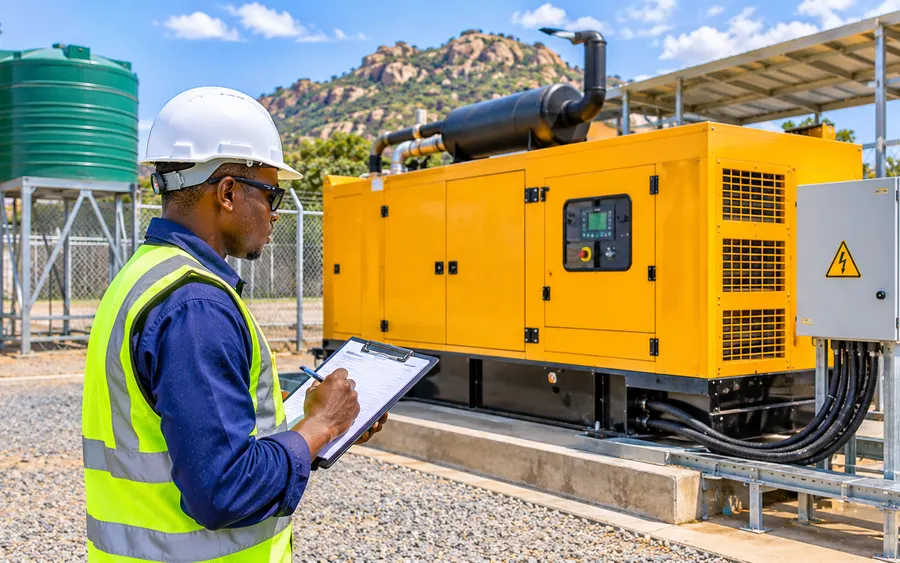 Diesel · 10 min readCutting diesel cost at a Zimbabwean site: solar, storage and generator controlRead the guide
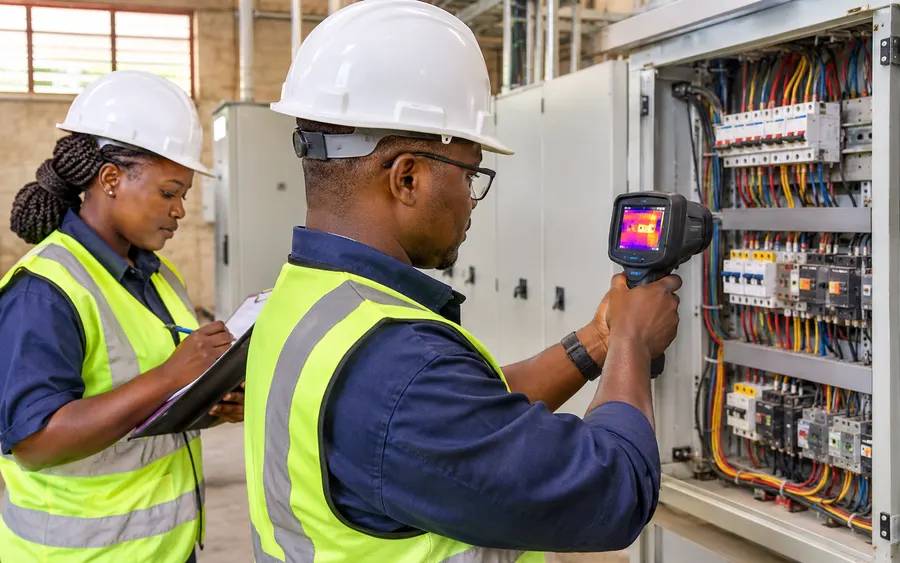 Maintenance · 5 min readThermal imaging for electrical faults: what it finds and how to act on itRead the guide
Talk to an AVEX GRID consultant
Have a project in mind, or want a second opinion on a quote you have received? Send us a short message and we will reply within one working day.