

Commercial & Healthcare
Office parks, malls, private clinics and upmarket retail that earn in US dollars and cannot afford outages, especially during peak ZETDC hours.
In depth
Reliable power for hospitals and clinics: backup, protection and cost
Hospitals are among the most demanding of all electrical installations. Their loads range from the sensitive electronics of an intensive-care unit to the heavy motors of a laundry. They work every hour of the year. They treat patients whose lives may depend on a steady supply. At the same time, many health facilities in the region work on a weak grid and a tight budget.
The scale of the problem
In January 2023 the World Health Organization, the World Bank, the International Renewable Energy Agency and Sustainable Energy for All published Energizing Health: Accelerating Electricity Access in Health-Care Facilities. The report estimated that close to one billion people are served by health-care facilities with no electricity or an unreliable supply. In sub-Saharan Africa, only about four in ten facilities were found to have a reliable supply.
The report links these figures to real harm. Vaccines and medicines spoil without refrigeration. Surgery and deliveries are done by torchlight. Diagnostic equipment cannot be used.
Zimbabwe is not outside this picture. Rural clinics that depend on a single weak power line face the same technical problem as urban hospitals that suffer planned and unplanned power cuts, only at a different scale. The answer starts with one idea: not all loads in a health facility are equal.
Classifying loads by what they can tolerate
The international standard for the electrical installation of medical locations is IEC 60364-7-710. IEC is the International Electrotechnical Commission, which writes international standards for electrical equipment. The standard sorts rooms by how they are used and by what happens if supply is lost. Some locations have no clinical problem if the power breaks. Others can accept a short break. Others, such as operating theatres and intensive-care rooms, need the supply restored almost at once.
For the most critical loads, the standard requires a backup supply to take over within a fraction of a second. For essential safety services it requires fifteen seconds. So no single backup device can serve every load. The design must give different speeds of recovery to different classes of load.
Building the backup chain in layers
The first layer is a UPS. It is a battery unit that carries the most critical loads with no break while the next layer starts. Size the UPS for the load it carries and for the time the generator needs to start and take over. Allow for the batteries ageing. At many sites, lithium batteries behind inverters can do the same job. They take less space and last through more cycles than lead-acid batteries.
The second layer is a generator with an automatic changeover switch. This switch moves your supply from the grid to the generator when the power goes off, and back again. It moves the essential board to the generator within seconds of a grid failure.
Read the full guide: Reliable power for hospitals and clinics: backup, protection and costAlso covered: Protection and earthing in medical locations · The role of solar and storage · Testing, maintenance and records
What you get
Hospitals, offices and malls need power that stays on and bills they can plan for.
Lower power bills
We review your tariff and peak demand, then add practical efficiency fixes.
Power that stays on
Backup and solar designs for the areas that cannot go dark.
Clear tenant billing
A fair split of the bill where tenants share one supply.
Deliverables
What lands in your inbox
- Tariff and peak-demand review
- Backup and solar design for the areas that must stay on
- Tenant sub-metering and a fair way to split costs
- Heat-camera survey of switchboards and plant rooms
 Refrigeration efficiency
Before the call
What to bring
Rough information is fine. This is what lets us scope and quote quickly.
- Your last 12 months of bills
- List of tenants and meters
- Generator and UPS details
- How we get into the plant rooms
How we work
From first message to finished work
- 1
Brief
A short call or message. Tell us about your site, your deadline and what is at stake. We reply within one working day.
- 2
Scope & fixed quote
We agree exactly what we will deliver, what we need from you, the timeline and a fixed price, before any work starts.
- 3
Engineer & document
We study your data, test the options and write the report or application, with every assumption stated.
- 4
Hand over & support
You get the finished package and a walk-through. We stay available while it is reviewed, approved or built.
Questions we hear
Before you book
Can you work while the hospital or mall is open?
Yes. We plan surveys around your daily operations.
What happens after I book a call?
We reply within one working day, agree a short scope and a fixed quote, and start once you approve it.
Keep reading
The full guide, in plain English
 Guide Healthcare · 7 min read
Reliable power for hospitals and clinics: backup, protection and cost
A reliable electricity supply is a clinical requirement. This article explains how health facilities group their loads, build backup in levels, protect patients and reduce cost with solar and storage.
The scale of the problemClassifying loads by what they can tolerateBuilding the backup chain in layersProtection and earthing in medical locationsThe role of solar and storageTesting, maintenance and records
Read the full guide
More guides that go with this page
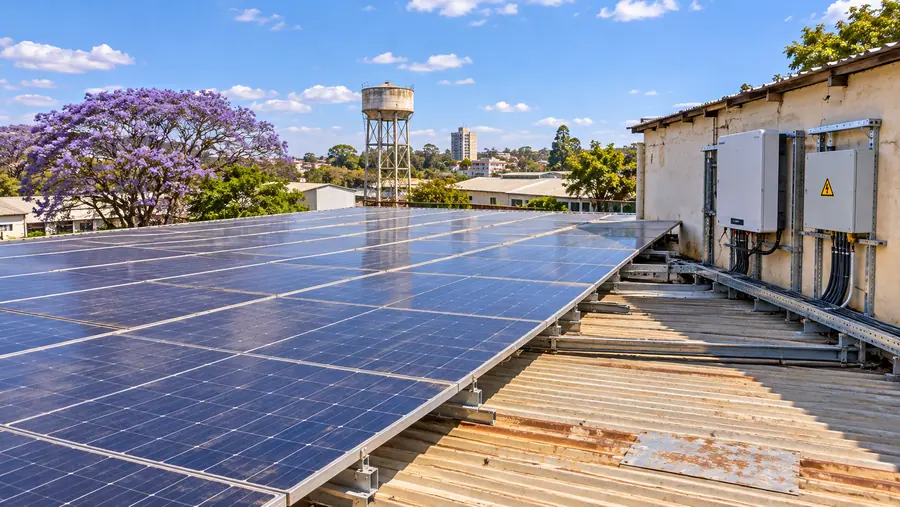 Solar · 11 min readIs solar worth it for your factory? A feasibility study explainedRead the guide
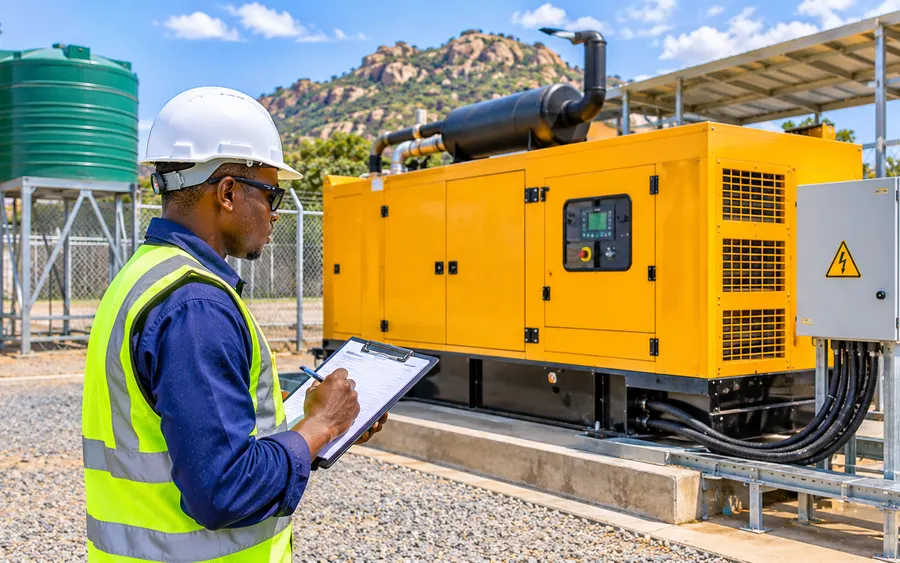 Diesel · 10 min readCutting diesel cost at a Zimbabwean site: solar, storage and generator controlRead the guide
 Storage · 10 min readSizing solar plus battery: the questions that decide the design and the costRead the guide
Talk to an AVEX GRID consultant
Have a project in mind, or want a second opinion on a quote you have received? Send us a short message and we will reply within one working day.