

Utility Bill Review
We go through your past and current electricity bills for overcharges, the wrong tariff class and wrong maximum-demand entries, and give you evidence you can use.
In depth
How to read a ZETDC bill line by line and spot what to challenge
Many companies pay their electricity bill after a quick glance at the total. The detail on the page is a record of how the meter saw your plant, and it is the starting point for any serious cost reduction. This guide shows how to read each part and which checks to run.
The structure of an industrial bill
Layouts differ between tariff classes, but the logic is the same. Use the table below as a map and confirm each line against your own document.
Five checks that take ten minutes
- Arithmetic. Multiply quantity by rate for each line and add the results. Small differences are rounding. Large ones are questions.
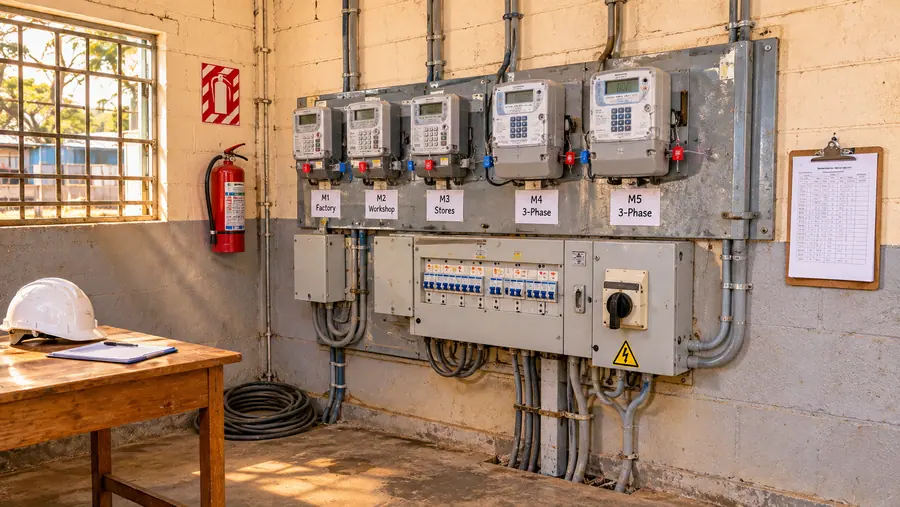
- Meter readings. The difference between the opening and closing reading, multiplied by the meter constant, should equal the billed units. An unusual multiplier is a common cause of surprises.
- Demand against your own data. If your plant logger shows a peak of 450 kVA and the bill states 520 kVA, find out why before you accept the difference.
- Power factor. Divide reactive energy by active energy. The ZERA-approved ZETDC schedule effective 1 December 2023 charges for reactive energy once it passes 33% of active energy. That is the same as a power…
Reading the power factor from the bill
If a bill shows 100,000 kWh of active energy and 55,000 kvarh of reactive energy, the reactive-to-active ratio is 0.55. That is above the 0.33 allowance, so a reactive charge applies to the 22,000 kvarh over the line. The power factor behind that ratio is about 0.88. Raising it to 0.95 or better removes the reactive charge and also lowers kVA demand. The correction, once sized from measurements, usually pays back quickly.
Read the full guide: How to read a ZETDC bill line by line and spot what to challengeAlso covered: The lines on your bill, in plain words · A bill read end to end · Where the money hides · Load factor: the number that explains the bill
What you get
Results you can take to your board or lender
Every line checked
Tariff class, demand, power factor, estimated readings and charges, all compared with your meter data.
Errors you can query
A short note with evidence to take to the utility.
Savings you can plan on
We separate one-off refunds from savings that continue.
Deliverables
What lands in your inbox
- Bill-by-bill review
- Check that you are on the right tariff
- Findings note with evidence
- Checklist for monitoring your bills
 Meter verification
Before the call
What to bring
Rough information is fine. This is what lets us scope and quote quickly.
- 12 to 24 months of bills
- Your tariff class and contracted capacity
- Any letters or emails with the utility about charges
- A list of meters on the account
How we work
From first message to finished work
- 1
Brief
A short call or message. Tell us about your site, your deadline and what is at stake. We reply within one working day.
- 2
Scope & fixed quote
We agree exactly what we will deliver, what we need from you, the timeline and a fixed price, before any work starts.
- 3
Engineer & document
We study your data, test the options and write the report or application, with every assumption stated.
- 4
Hand over & support
You get the finished package and a walk-through. We stay available while it is reviewed, approved or built.
Questions we hear
Before you book
How far back do you look?
Normally 12 to 24 months, as far as your records go.
Keep reading
The full guide, in plain English
 Guide Billing · 11 min read
How to read a ZETDC bill line by line and spot what to challenge
A practical walk through an industrial electricity bill: the energy, demand and reactive lines, the checks that catch errors, and the questions worth putting to the utility.
The structure of an industrial billFive checks that take ten minutesReading the power factor from the billThe lines on your bill, in plain wordsA bill read end to endWhere the money hides
Read the full guide
More guides that go with this page
 Tariffs · 10 min readZimbabwe electricity tariffs explained: maximum demand, power factor and how to cut your billRead the guide
 Tariffs · 7 min readHow to cut maximum demand charges in Zimbabwe: seven tactics that workRead the guide
 Power quality · 11 min readPower factor correction in Zimbabwe: stop paying for reactive powerRead the guide
Talk to an AVEX GRID consultant
Have a project in mind, or want a second opinion on a quote you have received? Send us a short message and we will reply within one working day.