

Smart Meter & Billing Verification
A faulty meter or the wrong tariff can inflate your bill. We compare meter data with your loads and bills, record any difference and give you the evidence.
In depth
Smart meter verification: how to prove your electricity bills are right
Smart meters and prepaid meters have spread across homes, shops, offices and factories. When they are installed and set up correctly, they record accurately. Disputes start when something is wrong. The difficulty is that a wrong number looks exactly like a right one. Verification is the process that tells them apart.
Accuracy, explained
A meter's accuracy is given as a percentage error: how far its reading is from the true value, as a share of the true value. A meter that shows 1,015 kWh when the true figure is 1,000 kWh is 1.5% fast.
The accuracy class of a meter is a rating, such as class 1, that says how large an error is allowed. For a static energy meter, the class is the limit of that error at reference conditions. A class 1 meter may be wrong by up to 1% either way.
The money value is easy to work out. A plant buys 180,000 kWh a month at 11 US cents per kWh, and pays US$19,800. A kWh, or kilowatt-hour, is the energy of 1,000 watts used for one hour. It is the unit your meter counts and your bill charges for.
Layer 1: Is the meter accurate?
Electricity meters are built to set accuracy classes under standards such as the IEC 62053 series. A verification is a check by an independent person that the figures are true and the method was followed. In a meter test, you compare the meter under test with a calibrated reference meter. Both are connected to the same load. The result is the percentage error at one or more load points.
Layer 2: Is it set up correctly?
A meter that is accurate can still produce the wrong bill if it is set up wrongly. The usual causes are listed below.
Read the full guide: Smart meter verification: how to prove your electricity bills are rightAlso covered: Layer 3: Do the readings add up? · A verification procedure · Why it matters · Faults that look like a billing dispute
What you get
Results you can take to your board or lender
Readings you can trust
We compare metered values with independent checks and your loads.
Evidence for a dispute
A clear record if readings and bills do not match.
Deliverables
What lands in your inbox
- Check of meter and CT/VT set-up
- Comparison of metered and measured values
- Short findings report
 Meter verification
Before the call
What to bring
Rough information is fine. This is what lets us scope and quote quickly.
- 3 to 6 recent bills showing meter numbers
- Your tariff class and contracted capacity
- Meter and CT/VT nameplate details, if you can reach them
- A description of the difference you suspect
How we work
From first message to finished work
- 1
Brief
A short call or message. Tell us about your site, your deadline and what is at stake. We reply within one working day.
- 2
Scope & fixed quote
We agree exactly what we will deliver, what we need from you, the timeline and a fixed price, before any work starts.
- 3
Engineer & document
We study your data, test the options and write the report or application, with every assumption stated.
- 4
Hand over & support
You get the finished package and a walk-through. We stay available while it is reviewed, approved or built.
Questions we hear
Before you book
Do you test the utility meter?
We review and compare data. Formal meter testing is done by the party authorised to do it.
Keep reading
The full guide, in plain English
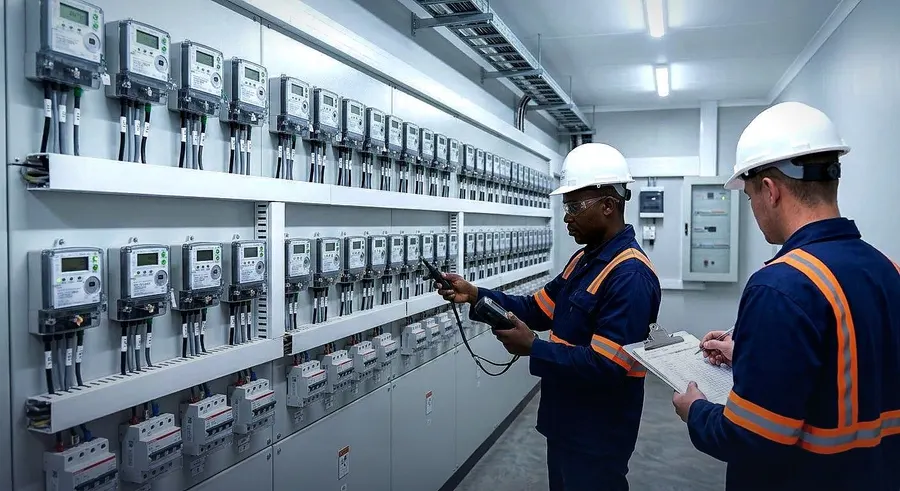 Guide Metering · 7 min read
Smart meter verification: how to prove your electricity bills are right
How to test a meter, check its configuration and reconcile sub-meters with the main supply, so that landlords, tenants and companies can trust the numbers they are billed on.
Accuracy, explainedLayer 1: Is the meter accurate?Layer 2: Is it set up correctly?Layer 3: Do the readings add up?A verification procedureWhy it matters
Read the full guide
More guides that go with this page
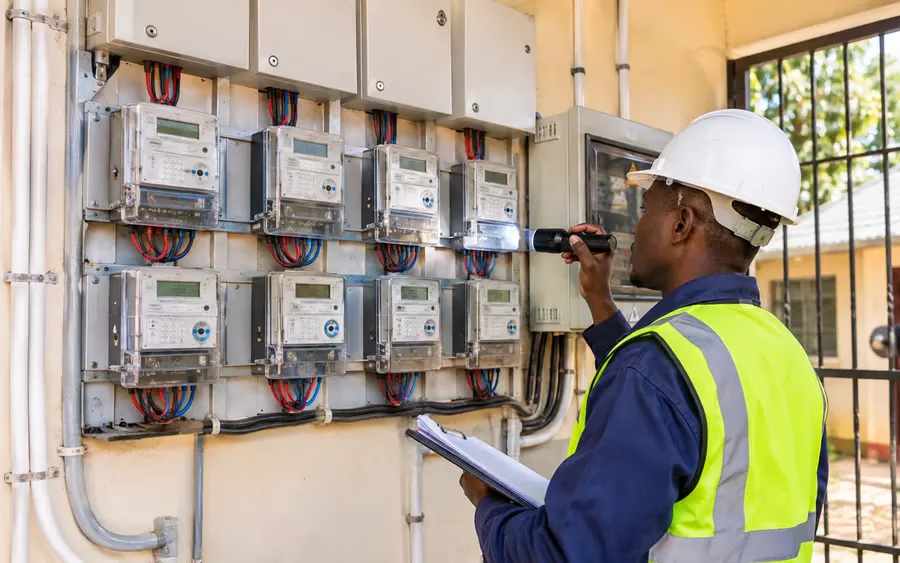 Property · 9 min readTenant electricity billing and smart metering for Zimbabwean property ownersRead the guide
Billing · 11 min readHow to read a ZETDC bill line by line and spot what to challengeRead the guide
 Solar · 8 min readNet metering in Zimbabwe, step by step: from design to the commissioning testRead the guide
Talk to an AVEX GRID consultant
Have a project in mind, or want a second opinion on a quote you have received? Send us a short message and we will reply within one working day.